Truskavets city, Borislavska st., 2A
Sign up through the call center
We are working:
Branch No. 1 (spinal treatment)
Mon - Sat:08:00 - 20:00
Nd:08:00 - 19:00

Branch #2 (Diagnostics and Health)
Mon - Sat:08:00 - 20:00
Nd:Weekend.
Hotline:
Order a call

Neuritis: causes, symptoms, treatment and prevention

What is neuritis?

Neuritis is an inflammation of a nerve fiber that can occur as a result of trauma, infection, or other factors affecting the nerves. This disease can affect one or more nerves, leading to a variety of symptoms and complications.

Types of neuritis 👇

There are several types of neuritis, which can occur in different parts of the body:

  • Axonal neuritis ⚡ This type occurs when the axon, the long extension of a nerve cell, is damaged. It can be the result of injury or infection.

More about axonal neuritis

  • Demyelinating neuritis ⚡ In this case, the myelin sheath surrounding nerve fibers is damaged. This can occur with reduced immunity or autoimmune disorders.

More about demyelinating neuritis

  • Polyneuritis ⚡ If multiple nerves are affected at the same time, this may indicate polyneuritis, which can be caused by toxins or systemic diseases.

More about polyneuritis

Characteristic symptoms of neuritis

Symptoms of neuritis can vary greatly depending on the type and location of the lesion. Some common symptoms include:

  • Pain: A common indicator of neuritis is pain, which can be sharp, paralyzing, or throbbing.
  • Weakness: Muscle weakness in the affected area, which can lead to difficulty performing normal movements.
  • Sensitivity damage: Decreased or loss of sensation in the affected area.
  • Pins and needles: that may occur along the affected nerve.

Causes of neuritis

  • Facial neuritis nerve It can occur due to local hypothermia in the neck and ear area or poor circulation. It can also be caused by infections, including herpes type I and otitis media.
  • Radial neuritis It is formed due to compression of the nerve root due to injury or excessive strain, as well as due to bacterial or viral diseases, intoxication, and compression.
  • Reasons auditory neuritis There may be infections that develop after influenza, mumps, rubella, meningitis, as well as exposure to excessive noise, poisoning with toxic substances, and disorders in the endocrine and cardiovascular systems.
  • Trigeminal neuritis occurs due to compression of arteries and veins, metabolic disorders, tumors, multiple sclerosis, and congenital pathologies.
  • Reasons brachial nerve neuritis There may be autoimmune diseases, injuries, and neoplasms such as oncology.
  • In addition to the above cases, there are also other forms of neuritis, such as: sciatic neuritis, optic neuritis(optic, retrobulbar neuritis) and nerve damage in the lumbar region.

Methods of treating neuritis in Truskavets

  • Physiotherapy: Special exercises and treatments can help restore muscles and improve circulation.
  • Medicine: Use of anti-inflammatory and pain medications to reduce symptoms.
  • Massage and manual therapy: The ability to relax muscles, improve blood circulation and calm the nervous system.
  • Surgical intervention: In cases of severe damage, surgical correction may be indicated.

Prevention of neuritis

  • Injury prevention: Avoid situations that could lead to injury.
  • Vaccination: Some infections can be avoided through vaccination.
  • Diabetes control: Keep your blood sugar levels stable.
  • Systematic examination: Regular medical checkups can help identify the risk of developing neuritis at an early stage.

Neuritis is a serious condition that can significantly affect a patient's quality of life. An integrated approach to treatment and rehabilitation, including taking into account the condition of the spine, can help the patient return to a full life. Regular consultations with a vertebrologist in Truskavets and following the recommendations will promote a speedy recovery and prevent complications.


Neuralgia: definition, symptoms, treatment and prevention

Neuralgia - is a condition associated with the sensation of pain along the nerves. This problem can last from 3 seconds to 3 minutes, the frequency can reach 40 times a day. It occurs for various reasons and causes a lot of inconvenience to patients. 

Types of neuralgia 👇

  •  1. Trigeminal neuralgia:
- Localization: Face, often in the area of the upper jaw, nose, and eyes.
- Symptoms: Sharp, intermittent pain that can be triggered by touch, chewing, or even the sensation of wind.

Treatment of trigeminal neuralgia

  • 2. Cervical neuralgia (occipital neuralgia):
- Localization: Back of the head, upper neck.
- Symptoms: Pain that can radiate up the back of the head, into the ears, and even into the eyes.

Treatment of neuralgia in the neck

  • 3. Lumbar neuralgia:
 - Localization: Lumbar spine, can affect the hips and legs.
 - Symptoms: Pain that can originate in the lower back and radiate along nerves into the hips and legs.

Lower back treatment in Truskavets

  • 4. Intercostal neuralgia:
- Localization: Spaces between the ribs.
- Symptoms: Acute pain that follows the path of the intercostal nerves may worsen with movement and breathing.

Treatment of neuralgia in the ribs

  • 5. Thoracic neuralgia:
- Localization: Thoracic region.
- Symptoms: Pain or discomfort along the ribs, which may be accompanied by tingling or prickling sensations.

Treatment of thoracic neuralgia

Neuritis treatment in Truskavets

Symptoms of neuralgia

The main symptom of neuralgia is pain, which can be sharp, aching, or stabbing. Other possible symptoms include:

  • Tingling along the nerves.
  • Loss of sensation in the affected area.
  • Tingling or burning.
  • Increased sensitivity to touch.

Causes of neuralgia

  • Compression of nerve fibers: Nerves can be compressed or damaged due to injury or disease.
  • Disease: Some diseases, such as herpes, diabetes, and arthritis, can cause the development of neuralgia.
  • Stress: Mental stress can affect the nervous system and contribute to the development of neuralgia.

Neuralgia treatment in Truskavets

  1. Pharmacotherapy: Medications such as analgesics, anti-inflammatory drugs, or drugs that affect the nervous system can help reduce pain.
  2. Physiotherapy the massage: Due to nerve damage, it is important to strengthen muscles and improve circulation. A physical therapist can provide effective exercises and treatments.
  3. Surgical treatment: Severe cases of neuralgia may require surgery to repair nerve damage.

Prevention:

  • 1. Healthy lifestyle: Regular physical activity and a balanced diet help strengthen the neuromuscular system.
  • 2. Stress management: Relaxation techniques, meditation, and other methods can help reduce stress, which can affect the nervous system.
  • 3. Timely treatment: Treating diseases that can cause neuralgia helps prevent its development.

Neuralgia is a serious problem that can significantly impair the patient's quality of life. If you suspect neuralgia, you should contact qualified specialists in Truskavets, such as vertebrologist or orthopedist, who are able to provide individualized and competent treatment. At the same time, proper prevention and a healthy lifestyle can largely prevent the occurrence of this unpleasant problem.

Neuritis treatment in Truskavets
Making an appointment with a doctor
Don't hesitate to contact our specialists for advice and an individualized treatment plan. We are ready to help you restore your health. .
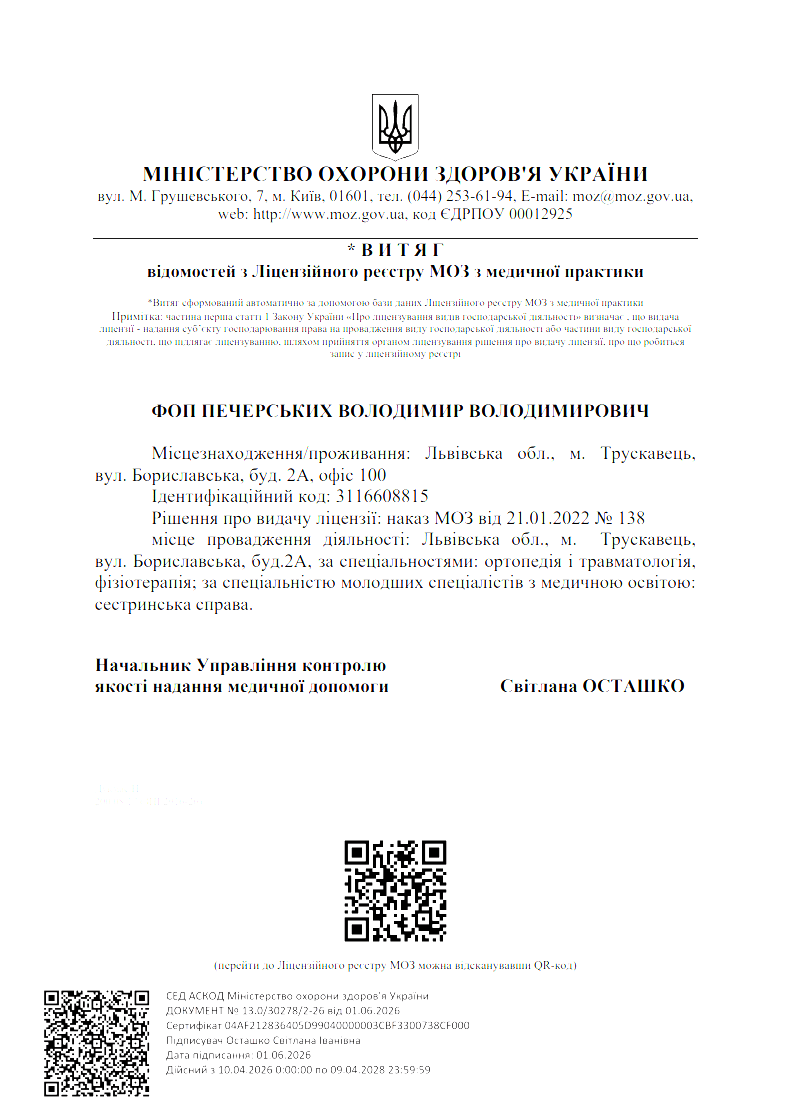
Certificates of the Ministry of Health
We carry out medical activities on the basis of a license issued by the Ministry of Health of Ukraine and in accordance with the current legislation.
Call
Select a branch